Tuesday, September 4, 2018

How to Industrialize Mars


How to Industrialize Mars
Casey Handmer

Remarks from talk given at the Mars Society Convention, August 23 2018, now in blog form.

I always prefer to start talks with a recognizable image. In this case, this is a Mars Global Surveyor image of Gale Crater, looking south. The crater is about 150km wide, and the Curiosity Rover is currently driving around near the right hand edge of the central mound.

Although I’ve probably seen this photo a thousand times, I only just noticed the Pancake Delta feature, just right of center at the top of the image.
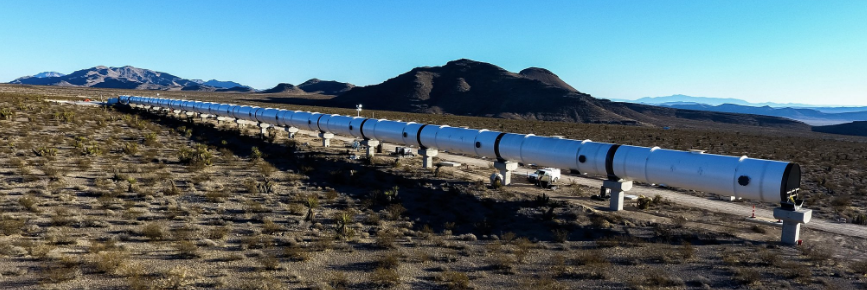


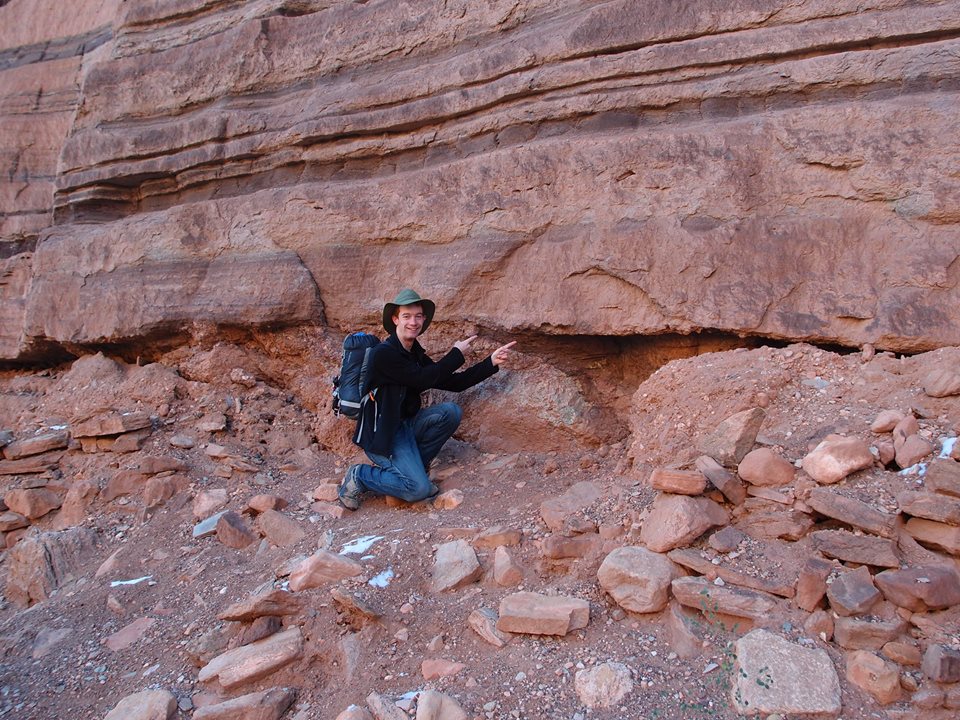
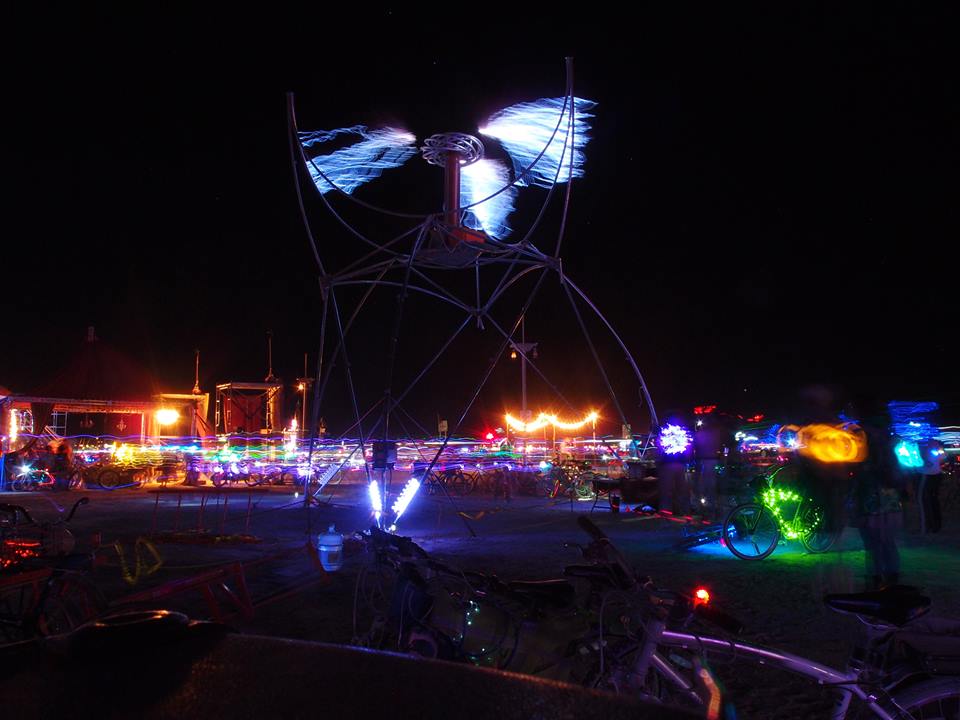
I’ll start with just a bit about me. I have many interests, though I’m formally trained in physics. I earned my PhD at Caltech in 2015, studying gravity in an effort to understand warp drive. Since it turned out to be impossible, I switched to working on the Hyperloop, where I was the levitation engineer, and more recently I’ve moved to JPL, where I work on GPS instruments. These pictures show me exploring the remnants of Siberian industry, a Tesla coil I helped build for Burning Man, and pointing at the Great Unconformity, a billion year gap in the geological record visible at the bottom of the Grand Canyon.



This is also the place for the great disclaimer, beginning with the obvious stuff. It is a great honor to be here speaking to you all, but I must stress here I represent my own views and research, not that of my employer!
Second, I don’t have a crystal ball. I don’t know for sure how to build a city on Mars. But this applies to most of us. We are all mostly not doing Mars settlement full time. Instead, we come together at events like these to share our ideas and enthusiasm and then spread it like the conference flu.
Finally, this talk/blog is derived from a book on the subject available gratis at: www.caseyhandmer.com/home/mars/, also available on Amazon at https://www.amazon.com/How-Industrialize-Mars-Strategy-Self-Sufficiency-ebook/dp/B07GN3BJX3/ for the princely sum of 99c. This work is a hobby of mine, it’s not my main gig, and my principal goal is to develop and workshop these ideas and disseminate them as widely as I can.
The goal here is to think systematically about visions of the future. It’s to inspire a more vibrant, rigorous level of discourse. It’s to help us find ways to find the right questions, questions that help us find useful answers.
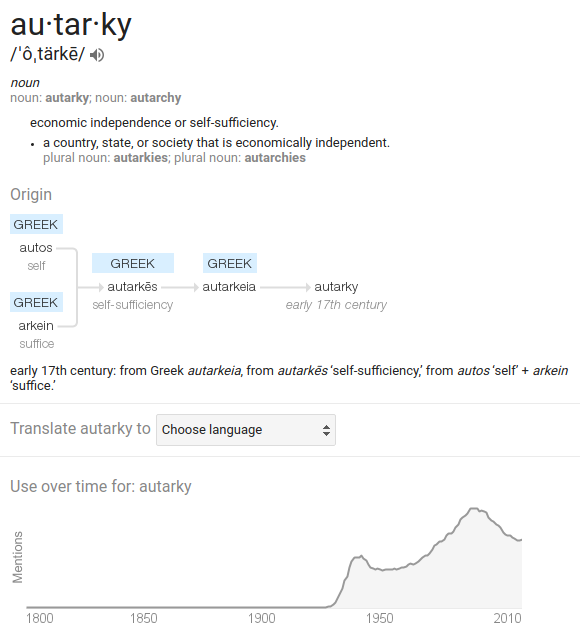
Let’s begin by defining autarky. It means economic independence or self-sufficiency.

Google trends shows that this word became very important in the 1930s when impending total war in Europe demanded industrialization for survival. Even though the word had been around since the early 17th century, it was the second world war, or the war of machines, that drove home the importance of industrial self-sufficiency.
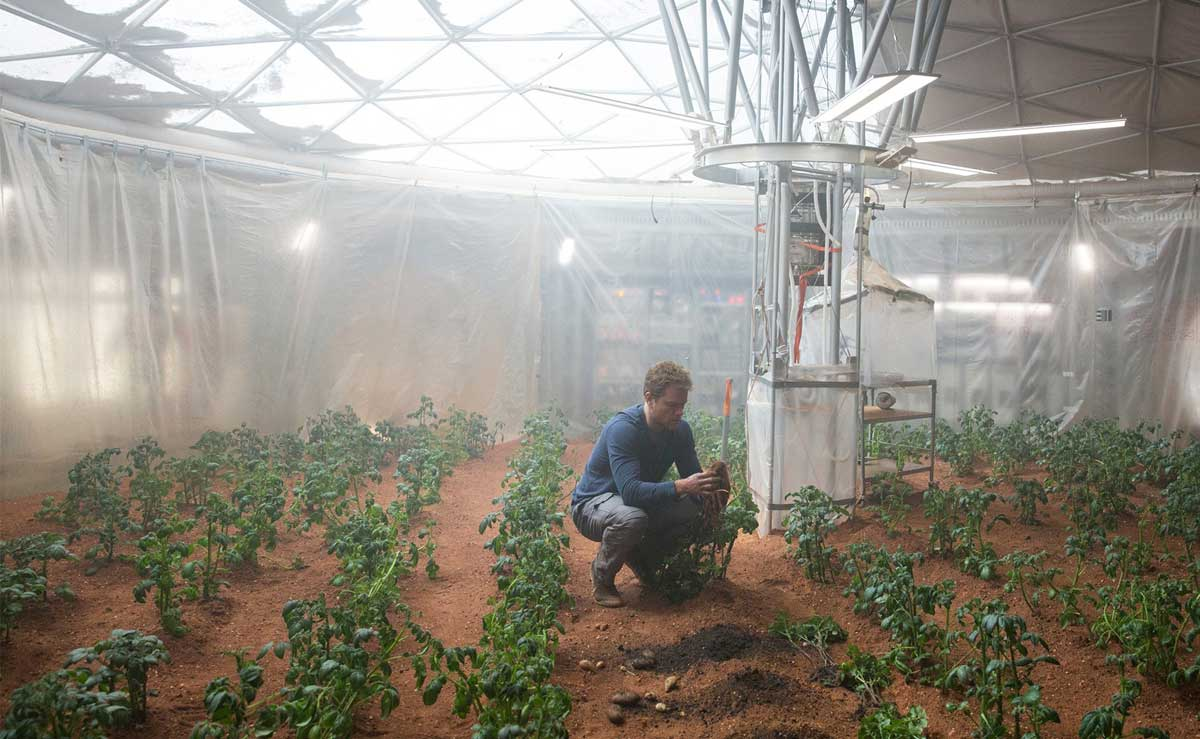

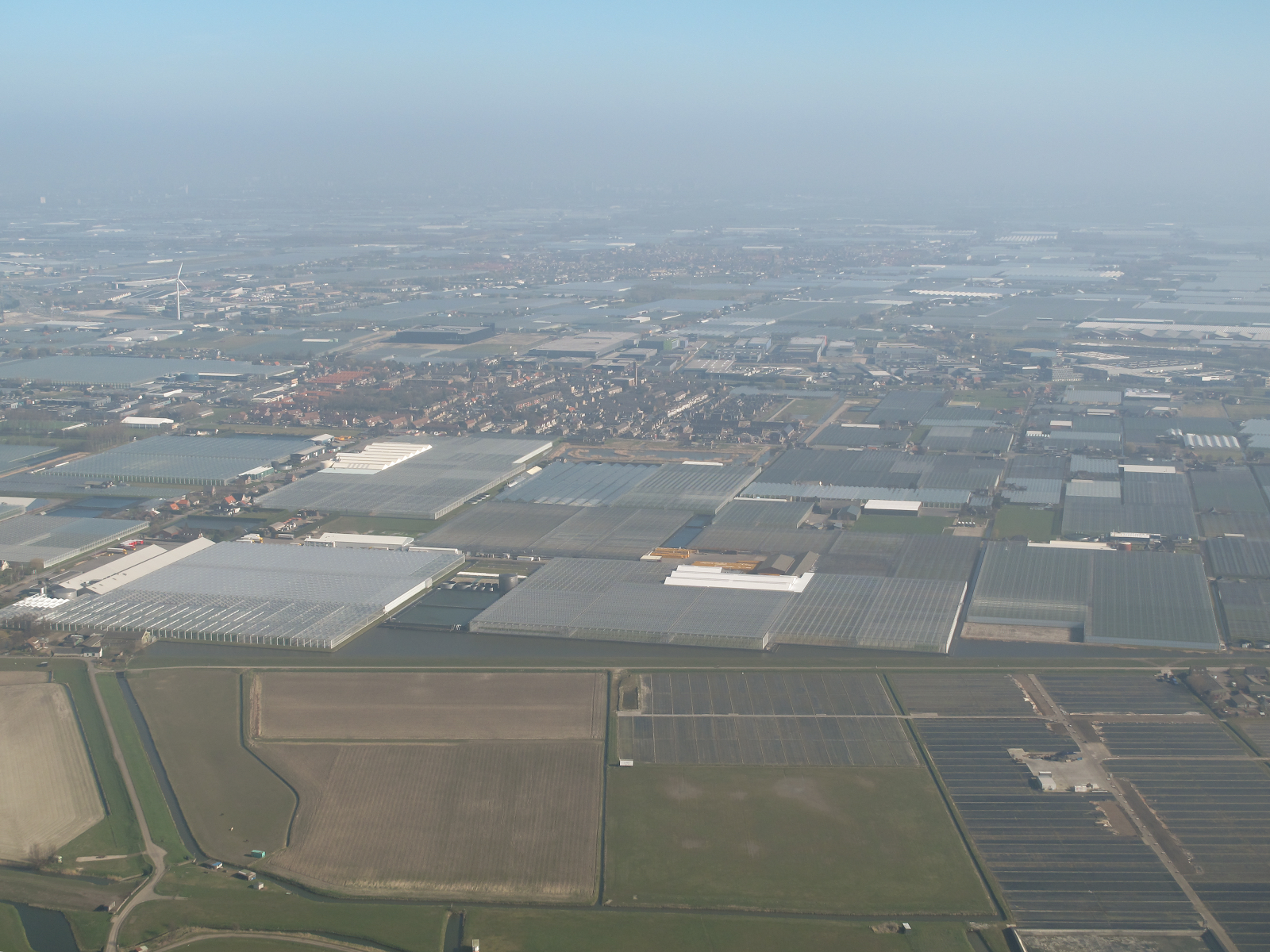
The Martian, with Matt Damon, is one of my all time favorite films. When we think of self-sufficiency on Mars, we think of growing potatoes. But what would have happened to Watney without a ride home? The book is quite explicit about this. Even if he had plenty of supplies? Even with a thousand qualified friends and greenhouses more like the incredible farms in Holland, which have the highest productivity on a per-area basis on Earth? Death is inevitable.
In the book of The Martian, Andy Weir writes that Watney depends on life support machines, including an oxygen generator, water reclaimer, and pressure vessel, to survive. These machines were made on Earth and beyond a handful of very basic repairs, cannot be built or maintained in space, and will not last forever.
Unlike the popular but flawed traditional colonial picture, humans cannot survive on Mars with 40 acres and a donkey. Like European geopolitics in the 1930s, survival in such an inherently hostile environment is simply not possible by analogy with the US history of rugged agricultural pioneers on the frontier. In fact food isn’t even the first thing to be produced locally, being rather hard to grow without lots of related infrastructure.
It’s worth stating that while self-sufficiency for a Mars city is a worthy goal, in all but the most catastrophic scenarios, Mars and Earth would continue to trade essential parts. In the early days of the Mars city, actuaries will be able to calculate the consequences of supply interruption, just as they do for remote outposts and bases on Earth. Although manifests will be designed to minimize the disruption caused by a low level of supply interruption, total isolation will inevitably result in death after a few months or years. As the city develops greater industrial capacity, this grace period will gradually extend until the point where isolated survival is possible indefinitely, even though it would be far from optimal! The capacity for indefinite isolated survival is autarky.
What is the alternative to agricultural analogies? How can we think systematically about industry in space?
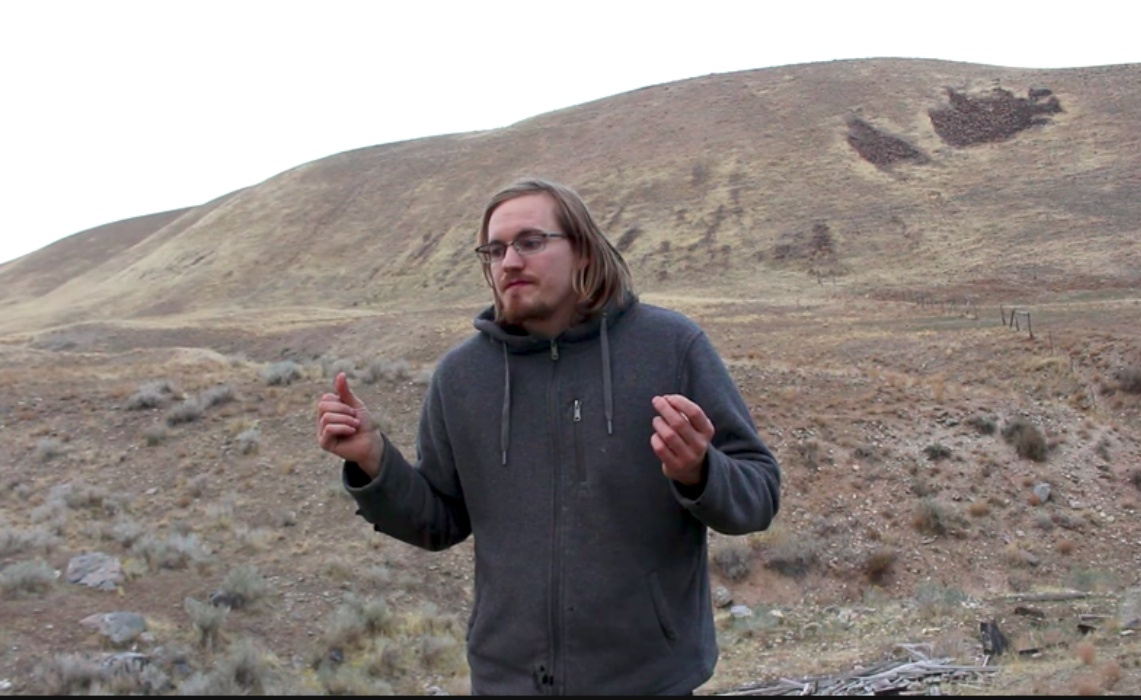
I would hope that my readers become very familiar with Cody Reeder! He has one of the most incredible YouTube channels: Cody’sLab. On this channel, he demonstrates the basis of a lot of primary production, including mining, farming, prospecting, and chemical purification. But even a thousand Codys would not survive very long on Mars.

Unlike Mark Watney, Cody has chemical and technical expertise adequate to build the necessary equipment from scratch. But while a thousand Codys could probably make *anything,* they could not make *everything* faster than the rate at which it breaks down in normal use. Indeed, if you watch the videos about his ranch, just keeping all the tractors and trucks running, in Utah with breathable air and access to McMaster-Carr, is sometimes pretty tough.

It is simply not enough to grow some food. Living on Mars is more like living indefinitely in a submarine. It will require automated manufacturing and, among other things, lots of metal. So let’s think big! Really big!
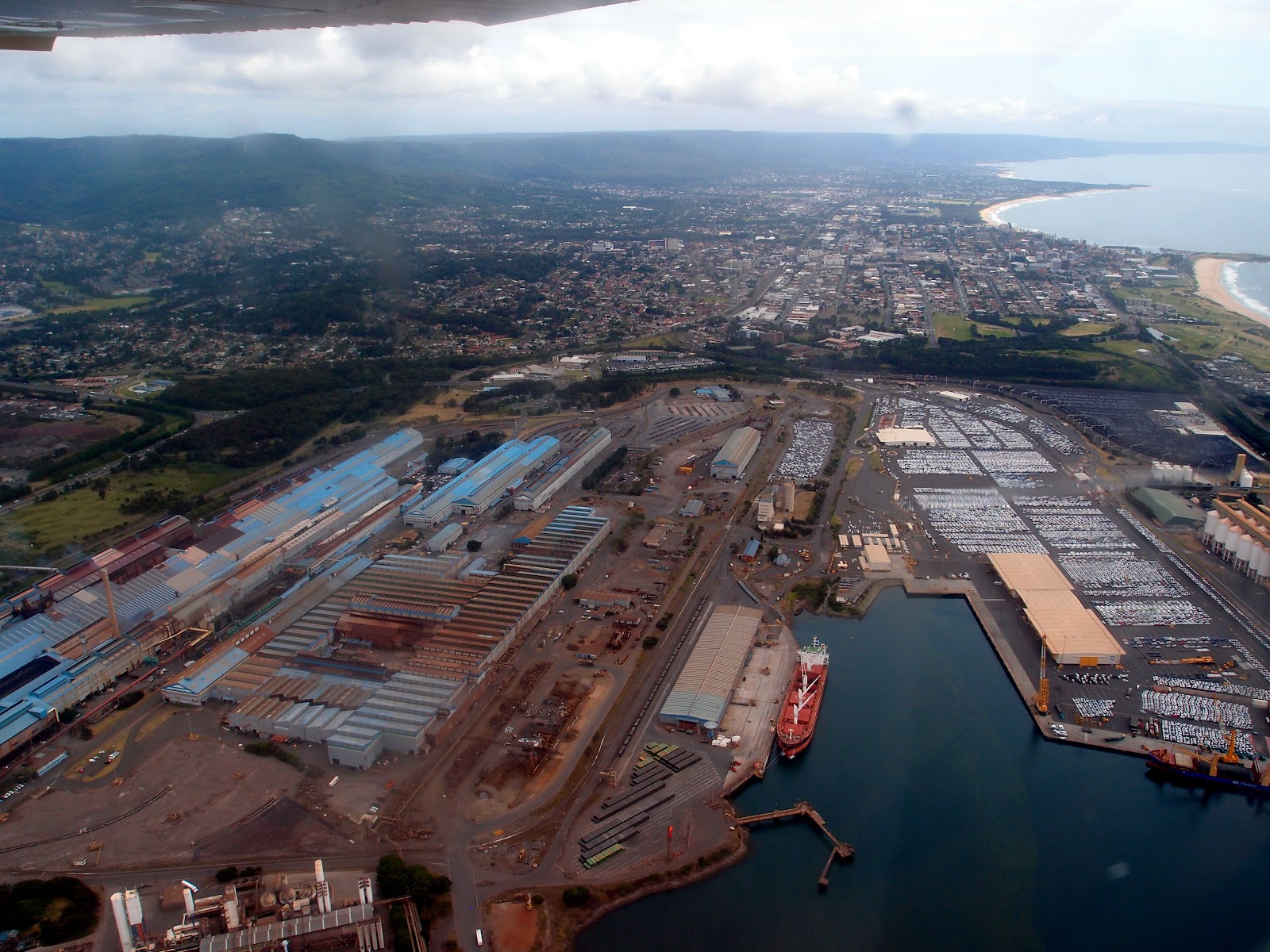
This is Australia’s main steel works, BlueScope Steel, which employs 16,000 people and produces about three million tonnes a year. It takes 30 minutes to walk across, but probably wouldn’t be big enough for a self-sustaining city on Mars.
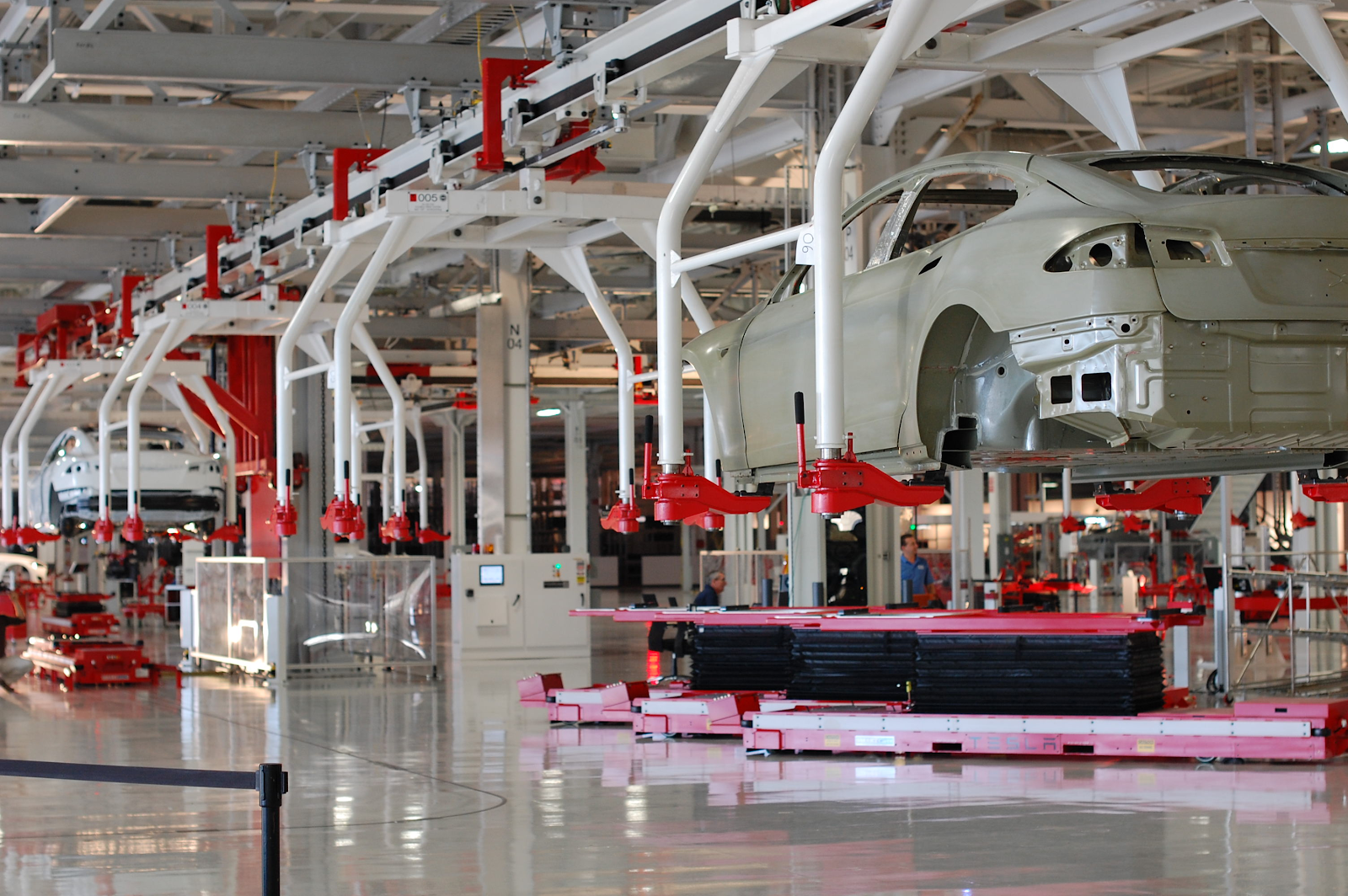
This is the Tesla Gigafactory, which is pioneering the next generation of industrial automation. The Gigafactory makes cars and batteries, but Mars will eventually need at least basic chip fabs, an advanced composites supply chain, and active industrial research.
Again, the aim here isn’t to be completely descriptive. My goal is that this helps you develop a new thought, an incisive question, or a new strategy.
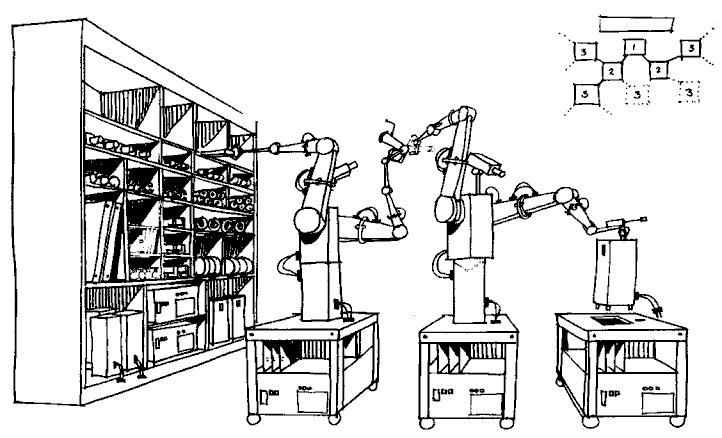
This is a good point to deal with a common diversionary tactic. Wouldn’t it be nice if self-replicating machines existed? 3D printers are very exciting precisely because they offer a technological shortcut for certain kinds of manufacturing. But they are not self-replicating machines, not by a long shot. They require very carefully curated input material and can produce only a limited range of parts.
Are self-replicating machines possible? Yes! Given the right resources, biological organisms can reproduce themselves, including my favourite here, Mr Platypus, and everyone else’s favorite, e coli.




But the platypus makes eggs containing baby platypuses, and e coli produces e coli. Convincing e coli to print a CPU or the platypus to lay an air filter would be something else!
So when we think of a self-replicating machine to solve all the industrial problems, we’re really describing a self-replicating factory or process that actually can produce anything. Which is nothing less than our modern globalized industrial society, in total. At least until someone builds a matter compiler, a regular staple of science fiction and asteroid mining concepts.
So we return to the original question, how to compactify the entire industrial stack and ship it to Mars?
What sort of scale are we talking here anyway? Is this a big problem? Oh yes!
China, 1410m
Mexico, 129m
Turkey, 81m
India, 1339m
Japan, 128m
Thailand, 69m
USA, 325m
Ethiopia, 105m
UK, 66m
Indonesia, 264m
Philippines, 105m
France, 65m
Brazil, 209m
Egypt, 98m
Italy, 59m
Pakistan, 197m
Vietnam, 96m
Tanzania, 57m
Nigeria, 191m
Germany, 82m
South Africa, 57m
Bangladesh, 165m
DR Congo, 81m
Myanmar, 53m
Russia*, 144m
Iran, 81m
South Korea, 51m
x

Here’s a list of the 27 most populous countries. The bolded ones contain essentially a complete industrial stack, by which I mean the ability to produce, within its own borders, all or nearly all technology necessary to produce the most advanced machines, including container ships, fighter jets, rockets, computers, mobile phones, and nuclear weapons. Russia doesn’t anymore, but it did until quite recently. South Korea does, sandwiched between Japan and China. Germany does, as a hub of sorts for the rest of Europe.
These data strongly suggest that a scale in the hundreds of millions is necessary to have enough labor specialization to support a complete industrial stack, and that’s on a planet on which we have evolved to survive essentially naked. Launching one hundred million people to Mars would be a major headache.
Let’s look at some counterexamples. Economically isolated countries like Albania, Cuba, North Korea, and Iran have every reason to attempt industrial autarky, and in many cases have tried really really hard. Yet even Cuba, with 11 million people, a very benign climate, and ample natural resources, has not succeeded. Australia, with 22 million, is not even close.
I like to think that with further advances, it might be possible to achieve autarky on Mars with *only* a million people, after 50-100 years of transport and building. But this would not be easy.
For comparison, imagine taking Iceland in 2018, a country with 350,000 people. Without imports, Iceland would regress to 18th century standards of living within a few years.
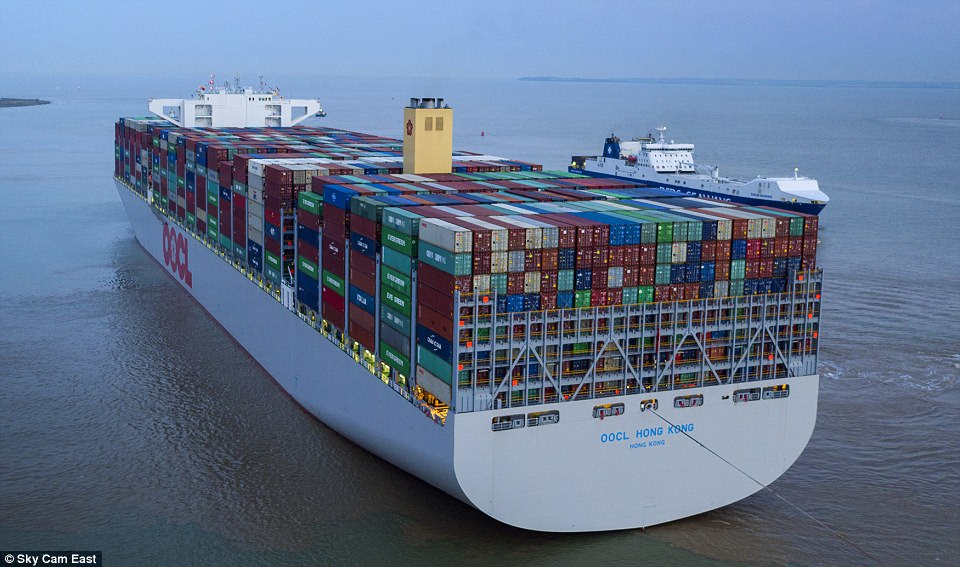
The OOCL Hong Kong, the world’s largest containership, can carry about 22,000 containers, which is roughly equivalent to 2000 flights of SpaceX’s BFR. I estimate is at least several decade’s worth of flights. So, given only unlimited money and one containership of gear, one has to reproduce the industrial versatility if not the might of Japan in Iceland by 2050, without substantial population growth. It’s almost unimaginable. But not quite!

Let’s talk about how to increase per capita human productivity in Iceland, or on Mars, by a factor of a hundred or so. The trick is the mechanization of labor, which is related to why whales have big mouths.

Consider a pre-industrial agricultural society, such as the fields pictured above. All available energy in the form of work is derived from solar power, from photosynthesis, and all available physical labor is from human muscle. Therefore, the total output of the system is limited, fundamentally, by how much energy all the humans can consume and digest.
Yet the gap in GDP between industrialized and pre-industrialized societies is a factor of 30-60. By freeing themselves from the requirement of work of sweat off the brow, a single human can control a gigantic, usually gasoline-powered, machine, or even remotely program one, to perform labor on its behalf.
We’ve already seen that while on Earth, a sufficiently motivated, knowledgeable individual can survive in many places with no resources, an industrial Mars will require the production efficiency of a hundred million humans. The fundamental problem for industrial human societies on Mars is a terrible shortage of labor, so the solution is to automate, mechanize, and outsource non-local tasks. By how much?
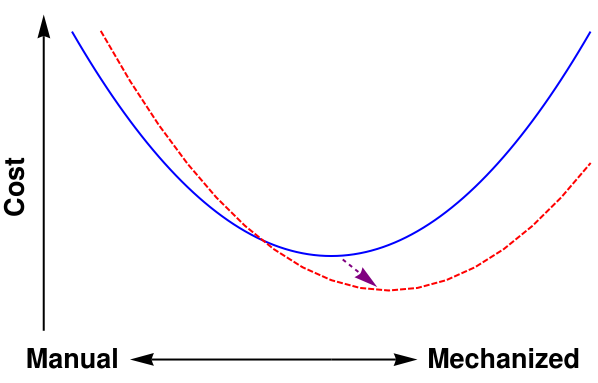
Consider the manual-mechanized continuum graph. For any level of technology, there is an optimal blend of human and machine labor. Compare, for example, the manual construction of the pyramids and the rapid modern construction of a house by a skilled contractor.
As technology improves, the optimal point moves to the right, but it is *never* most efficient to completely automate something, even the construction of a moon or Mars base. Complete automation is a subset of the self-replicating machine problem. A complimentary mixture of humans and machines is the way to go.

Take for example these two drilling systems. One is eight orders of magnitude more expensive, but doesn’t need a human to “line it up”. And sometimes it breaks down for a year at a time. Perhaps NASA paid too much for the rover, and it’s only 7 orders of magnitude more expensive than a human-controlled tool?
from future import industry
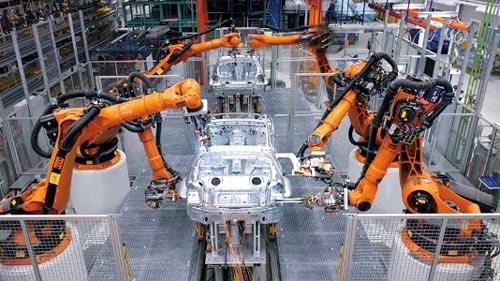
How can we achieve a Japanese level of industrial versatility and power with Iceland-style population? We must grow the fraction of labor that’s automated as the base scales. For instance, if the base doubles in size every launch window, the productivity of the supporting industries must also double, without doubling their labor requirement. Instead, individual labor productivity must also double at close to the same rate.
What does increasing individual productivity by three orders of magnitude look like? For inspiration, let’s consider the development of programming languages. The answer is the sequential interposition of layers of automated abstraction between the human and the physical stuff. This approach is only cost effective in situations of profound labor shortage, such as keeping up with exploding capability and complexity of modern computers.
Computer languages have evolved some hierarchy like machine code, Assembly, C, C++, Python. Each step encapsulates another layer of abstraction between the human writer and the fundamental logical operations, allowing much more powerful things to be done with a given labor pool. But let’s not stretch the analogy too much.
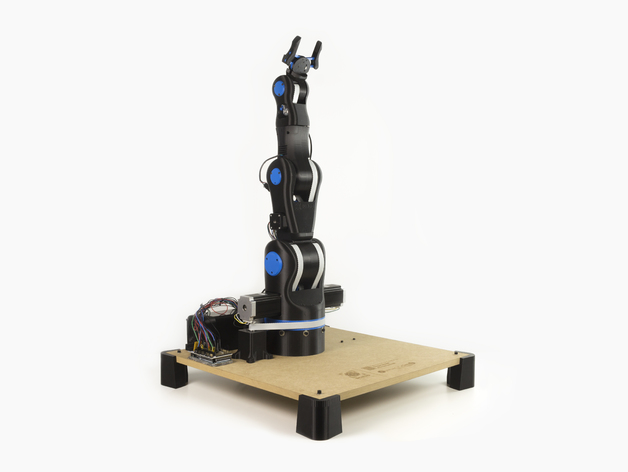
The final question I want to cover is order of industrial roll out. What resources get made first? As a case study, consider this incredible open source robot arm, the BCN3D-Moveo (https://github.com/BCN3D/BCN3D-Moveo). Mars will need a lot of robot arms, so this isn’t a bad place to start.
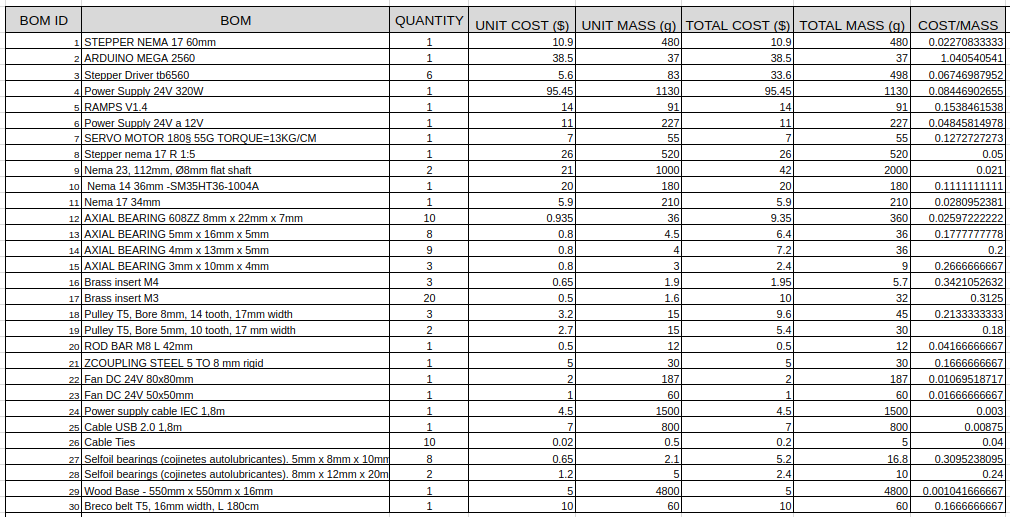

Here’s (the interesting half of) the BOM, or bill of materials. This is a shopping list from which the arm can be made. Broadly speaking, components fall into five groups: Structure, fasteners, bearings, motor, and power.

  • Structure, which are the bones, base, and carry the weight of the arm.
  • Fasteners, such as bolts, rivets, screws, nuts, clips, and so on.
  • Bearings, which enable two adjacent hard parts to swivel past each other with low friction and wear.
  • Motors, which provide the forces. Motors are deceptively cheap due to mass manufacture, but often require weird magnets and low sulfur high conductivity copper and other things that are hard to come by on any randomly selected part of Mars.
  • Power, which includes cables that move electricity around but also printed circuit boards, control logic, microcontroller chips, and other components which are relatively cheap on Earth, light, and very difficult to make from scratch.

I tabulated the cost as a proxy for manufacturing difficulty and the mass as a proxy for transportation difficulty from Earth. While a workshop on Mars could make any of these parts, mass local manufacture will proceed in order of mass divided by difficulty of manufacture, which is the order tabulated above.
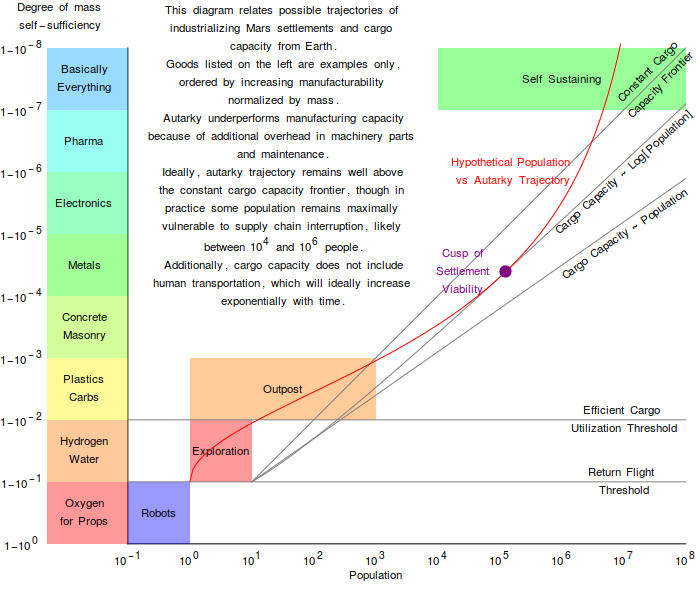

This is what you’ve been waiting for, the roadmap for industrialization. There’s a lot going on in this figure, so let’s unpack it!
On the left, I’ve ranked successive orders of magnitude of industrial “closure”, or local production capacity. Starting with oxygen, then water and fuel, plastics and some food, then masonry, structural metals, then alloys, electronics, advanced chemistry and computer processors.
On the bottom, we have population. Today, we are in the bottom left, with only robots. With local production of oxygen and fuel, humans can explore and even operate outposts like the Antarctic stations. But at some point vast quantities of cargo and humans will have to be shipped to traverse this dangerous area of potential collapse. This area is dangerous because the population is too large to be evacuated and too small to be self-sufficient. The city traverses the graph toward the top right, such as the trajectory marked in red. Ultimately, the city has a large population and a diverse, self-sufficient industrial base.
The major primary industries deal with mining of any desired element. Because each mine will have to operate in the hostile Mars environment, emplacement of primary industry incurs a much steeper labor penalty than increasing complexification of secondary manufacturing, which can be conducted entirely inside large, pressurized, climate controlled habs.
For this reason, from the exploration phase until the cusp, marked with a purple dot, each order of magnitude of mass self-sufficiency requires more than that of people. Beyond this point, marking the completion of a local basic material supply chain, relatively small additions of population have an outsized effect on industrial closure. I estimated the critical stage on this graph is from about 1000 people to 100,000.
The fundamental limit here is Earth-Mars cargo capacity, as illustrated by the grey lines. Cargo capacity is determined by how fast we can build gigantic rockets here on Earth. Today, SpaceX can build about 20 cores a year, but Boeing can build 560 737s a year, a machine of comparable complexity. So I think this is a tractable problem, within the capabilities of our current civilization.
In summary, autarky is possible, but requires a really bold vision for scale, lots of giant rockets, lots of people, lots of ongoing, though non-infinite, investment of money and effort on Earth.
What questions do you have?


Sunday, August 5, 2018

Atmospheres and Terraforming


I have been meaning to write a blog about terraforming for many years, but the recent controversy (thanks Elon) about some exciting MAVEN results is the perfect opportunity.


MAVEN, or Mars Atmosphere and Volatile EvolutioN, is a satellite orbiting Mars since 2014 specifically to study its atmosphere. Previous Mars missions have studied parts of its surface, and the InSight mission due to land in late November will study, for the first time, the interior of the Red Planet.


Mars' geological history is an enduring mystery. Much of the surface is heavily cratered, like our moon, meaning that we have a pretty good record of what ancient rocks were doing, because they're still there. In contrast, Earth's surface has been worn down and subducted many times through the process of plate tectonics. Yet if we look closely, there are clear signs of flowing and standing water. This is puzzling in many ways. Where did the water come from? Where did it go? Why did it stop flowing? And, given that back when this surface formed the sun was much younger and cooler, how could Mars have been warm enough to sustain liquid water on its surface?


This image shows gullies and deltas in the south west part of Gale Crater, not far from where the Curiosity rover is currently driving.


MAVEN was designed to study the evolution of Mars' atmosphere, and a series of results have provided exciting new insights. It has long been theorized that Mars' atmosphere was gradually stripped away by the solar wind. Unlike Earth, Mars lacks a strong gravity well and a big magnetic field, which increases the rate that gases, particularly lighter gases, are stripped from the planet. This accounts for why Mars' atmosphere is today both thin and mostly of CO2. But since gases are constantly bubbling up from the interior of the planet through volcanoes, we needed to get quantitative data. MAVEN provided that data. Today, Mars loses about 100g/s, or 3000T/year, of atmosphere. This sounds like a lot, but the total mass of Earth's atmosphere, for comparison, is 5*10^15T. To put 3000T/year into perspective, a large passenger jet produces about that much CO2 in a week.


It is a popular misconception that for humans to live on Mars, Mars would need a magnetic field. There are all kinds of difficult things about living on Mars (see http://www.caseyhandmer.com/home/mars) but building a planetary scale magnetic field would be at another level entirely. Fortunately, Mars does not need humans to built it an artificial magnetic field for any reason! As we will soon see, atmospheric loss rates are vanishingly tiny over the relevant time scales of less than a billion years, and Mars' current atmosphere provides adequate, if not flawless, protection against space radiation for nearly all cases.


So what's all the fuss about?


Noted Mars human exploration advocate Robert Zubrin, together with planetary scientist Chris McKay, wrote a series of papers in the early 1990s exploring the idea of terraforming Mars (see eg. http://citeseerx.ist.psu.edu/viewdoc/download?doi=10.1.1.24.8928&rep=rep1&type=pdf). Taking Mars Viking data and using rather primitive simulations, they were able to show that, under some reasonable assumptions, there was enough CO2 frozen into the surface of Mars that only a tiny addition of heat, by humans, would be enough to tip the climate away from its current frozen state to a runaway greenhouse. As the planet warmed, it would release more gases, warming further! Eventually, this process would be slowed by the lack of remaining accessible gases. If the atmosphere became warm enough, water would melt and restart the hydrological cycle, creating a much more Earth-like environment, albeit with a poisonous atmosphere of mostly CO2. Still, having to wear an oxygen mask to breath is much less onerous than an entire space suit.

Potential problems included uncertainties about the stability of a hydrological cycle on a planet with such tall mountains, as water would snow there and accumulate in glaciers, removing liquid water from the system and reflecting more of the sun's heat into space. Additionally, the total reserves of CO2 in the polar caps and under the soil was poorly constrained.


Last week, a Nature paper (https://www.nature.com/articles/s41550-018-0529-6) was published by Jakosky and Edwards arguing that, based on data from more recent orbiters, the total near-surface reserves of CO2 are much too low to built up the atmosphere enough for terraforming. What a bummer!


I'm not sure if I find this result surprising. I would think that if Mars were, according to Zubrin and McKay, only a few degrees away from runaway warming, that a sufficiently large meteorite impact or volcanic eruption in the last few million years might have been enough to tip the scales. And perhaps, in the past, it was. There is some evidence for smaller scale water flows in the more recent past, but whatever happened and when, the planet is cold and dry now. According to the principle that our present time is not "special" in any way, that suggests that Mars reasonably robustly and quickly returns to something like its present state. How much meddling is necessary to terraform the planet is another question entirely!


Of course, the usual players got into the act on Twitter: https://twitter.com/DiscoverMag/status/1024135166007095296.

Ah Twitter, where you can watch your heroes disgrace themselves in real time!


Clearly the only way to fix this impasse is for me to write a blog no-one will read adding almost no substantive information to the deafening screams. But with math!


The Earth's atmosphere is thickest at the surface, and gets thinner as one ascends until it peters out into space. At the surface, we experience air pressure of 101.3kPa, or 1bar. I prefer bar as a unit of measure in this case!


Even though gas is roughly 1000x less dense than condensed matter, it is still affected by gravity. Indeed, the reason that the air is thicker and at higher pressure down low is that all the air above it is pressing down on it. So even if we somehow liquefied all the air (by making the Earth really cold) the pressure at sea level would stay the same. In other words, a phase change doesn't change gravity! Only now the Earth would be covered not by a gaseous atmosphere, but by a thin ocean of mostly liquid nitrogen and oxygen.


I personally really like this way of thinking about global gas and liquid resources. That is, in terms of a global equivalent liquid layer of some depth.


Let's start with our home planet, Earth. We're going to ignore sources of volatile molecules beneath the crust, though there's a huge amount there too, and focus on surface resources. Earth's global equivalent depth of water is 2.6km. The next most abundant molecule is nitrogen, with a global equivalent layer depth of 8m. Then oxygen, with 2m. 10cm argon, 4cm water, 4mm carbon dioxide (up from 2.5mm 5000 years ago), 0.2mm neon, and a hair of helium, methane, krypton, and hydrogen. This is a total depth of 10m, which will be familiar to SCUBA divers computing pressure at depth.


By comparison, Venus has an atmosphere that, if liquefied, would be more than 600m deep.


For humans to breathe, they need an atmosphere with oxygen, some buffer gases, and not too much of poisonous gases, such as CO2 and CO, among many many others. But how much oxygen do humans need? The partial pressure of oxygen in haemoglobin, the blood's oxygen carrying molecule, is 130mbar. This means that at a partial pressure of oxygen below this, the blood is not saturated with oxygen, and less physical activity is possible. For healthy, adapted, young people it's possible to walk around and live at 5500m of altitude (ppO2 = 100mbar), but it's pretty hard to reproduce over 4000m (ppO2 = 128mbar).


There are various tricks people use to exist higher up, such as breathing pure oxygen with positive pressure, but the same general rules apply. Lots of mountain climbers with great gear die all the time. Ideally, an atmosphere with 0.2bar is enough to allow physically active humans to breathe from an unsealed oxygen mask, but without a pressure suit. At the absolute lower limit, the Armstrong Limit of 68mbar is the vapor pressure of water at human body temperature (https://en.wikipedia.org/wiki/Armstrong_limit). Below this, the body's surface fluids boil and adequate oxygen cannot be delivered by any means without a pressurized garment.


On Earth, 0.2 bar is achieved with a depth of 2m of liquid water or liquids of similar density. On Mars, the gravity is 37% as strong, so a 2.7x greater depth of liquified gas is required. Condensed CO2 is about 1.5x as dense as liquid water, so taking these numbers into account, a layer of dry ice 3-4m thick on Mars is adequate to produce an atmosphere with oxygen mask enabling pressure. Is there 4m of CO2 mixed into Mars dirt within 200m of the surface?


The next step is to examine the known resources on Mars. Mars' atmosphere is so thin it's about 1/100th as thick as Earth's. That is, if it were condensed, it would be about 10cm thick on the surface. In terms of its composition, that tiny crust is 9.6cm CO2 (+- 2cm seasonally, as some freezes out in winter), 2mm argon, 2mm nitrogen, 0.15mm oxygen, and less than a hair of carbon monoxide.


Despite the fact that Mars' atmosphere is almost totally CO2, it is thought that Mars' volcanic processes have produced significantly less CO2 over geological history than Earth, because Mars' small size and resulting reduced pressure in the mantle is unable to produce much CO2 from various metamorphic transitions at depth.


So ideally a runaway greenhouse terraforming first effort on Mars would increase the volatilized supply of CO2 from its current level of about 10cm global equivalent depth to 4m, an increase factor of 40.


At this point I would like to point out why it is that losses due to solar wind don't matter. If 4m of CO2 is produced in, say, 100 years, then that's a rate of 4cm/year. Even if global losses increased from 3000T to 300,000T/year due to an increase in cross section, the annual loss rate is an equivalent depth of 2nm. It's in the noise.


Zubrin and McKay (1993) attempted to estimate reserves of CO2 available. The two main sources they considered were the south polar cap and frozen into the regolith, with 100mbar and 400mbar of CO2 respectively. This is equivalent to 1.8m and 7.2m global equivalent depth respectively, or easily enough to get to a warm, wet, oxygen-mask requiring atmosphere, even if only half the CO2 was readily accessible.


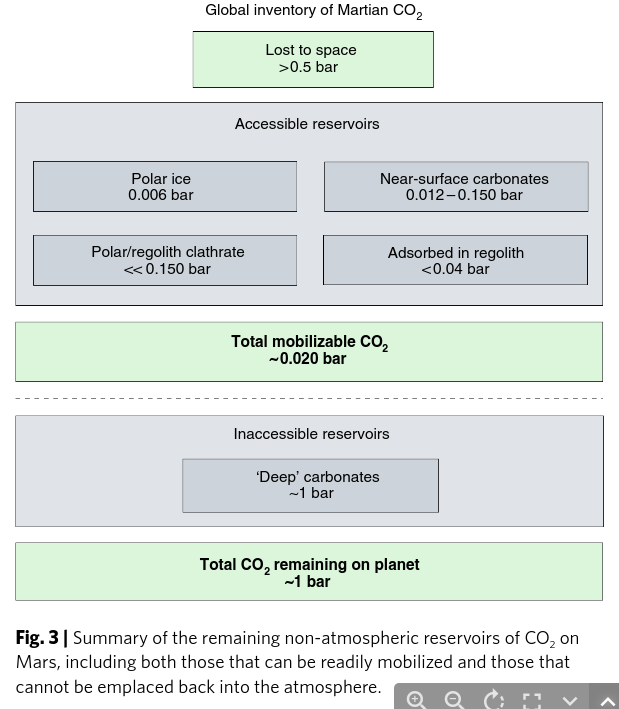
25 years later, we know a lot more about Mars, so let's check how Jakosky and Edwards have refined these early estimates. They estimate a total resource of 10cm of CO2 at the south pole (which turned out to be mainly water ice), and 1.8m absorbed on minerals in the regolith. They also provide an upper limit on total CO2 in clathrates (150mbar, 2.7m) and near-surface carbonate rocks (150mbar, 2.7m), despite admitting that there is little evidence for either, especially anywhere near that much of them! In total, there doesn't seem to be enough CO2 remaining on Mars to warm the atmosphere.


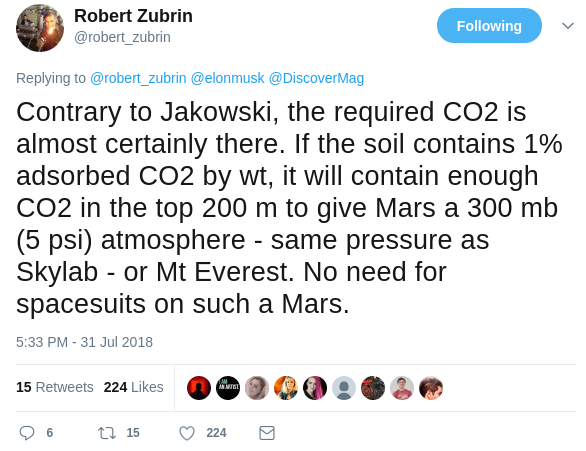
In response, Robert Zubrin tweeted:

Both Zubrin and Jakosky estimate 1% soil mass fraction of absorbed CO2 by weight, though Zubrin goes down to 200m instead of 100m. Reducing his estimate to 100m, 150mbar of atmosphere is still a lot more than Jakosky's estimate of 40mbar. What's going on here?


I don't know for sure how they did their math, but it seems that Jakosky has assumed a regolith density equivalent to water, whereas rock is typically 3x as dense as water. Zubrin's estimate would call for a global equivalent layer of 4m of CO2 in 200m of regolith, since condensed CO2 is about 2x less dense than rock. 4m of CO2 under Mars' gravity produces a pressure of 220mbar, which while 25% less than Zubrin's estimate, would be adequate to walk around in.


That said, 1% w/w is as much of a guess as 200m effective absorption depth. Even on Earth we don't have a good understanding of the water fraction of permafrost, or its thermal conductivity, or extent, and permafrost is a reasonably good analog for Mars perma-CO2-frost.


As far as I can tell, there just might be enough CO2 on Mars to begin a greenhouse warming effect, but even in Zubrin and McKay, they recognize that uncertainties in regolith affinity for desorbed CO2 could shift their equilibrium a lot. In other words, it really doesn't hurt to tip the scales solidly in the desired direction. We know this is possible, since with a 1mm addition of CO2 to Earth's atmosphere we've warmed the planet considerably!


A wide variety of terraforming methods have been proposed over the years, some less practical than others. The overarching goal is to increase the total amount of heat energy on the planet. The baseline heat source is the sun, which delivers about 10^16W (10 petawatts!) to the surface of Mars.


In order from least sensible to most sensible:


Nuking the poles. The Earth has about 15,000 warheads with a total yield of 6500MT of TNT, which is 2.7x10^19J. This sounds like a lot, but is equivalent to only 45 minutes of sunlight. Even if the bombs were carefully landed and detonated under the ice caps, instead of exploded while flying by, the net contribution to the heat budget is negligible. Even if all the uranium in the crust of Earth AND Mars were enriched and allowed to produce heat in reactors, it wouldn't be enough to make a difference. The sun is THAT powerful, which is why solar energy is so exciting.


Crashing comets. Mars is pretty dry, though the exact quantities of water left frozen under the surface is not very well constrained. It could be between 20cm and 200m global equivalent layer. Even if it turns out there's no water or gas left, the thinking goes, comets or small moons could be brought in from the outer solar system and crashed into the planet to thicken the atmosphere and warm things up a bit. Unfortunately, the sheer quantity required to do this exceeds known reserves of comets! Not to mention the fact that landing enough of them to make a difference would completely resurface the entire planet and kick up enough dust to ruin things for centuries. Finally, the energy and time required to move icy bodies from the outer solar system inward is quite prohibitive, compared to the requirements of other methods listed below.


Giant mirrors. The fundamental advantage of mirrors is that they can be made extremely thin, and thus with relatively small quantities of material. Additionally, a mirror can be made in a curve to concentrate sunlight on a particular area, which is necessary to either melt down to subsurface resources or vaporize carbonate rocks. A series of mirrors 100km on a side could be made with as little as 40T of material, so in principle launchable on a Falcon Heavy then flown using solar wind pressure to Mars, before finding a stable equilibrium between Mars gravity and solar pressure, from where to gently barbecue the planet.


The last two options are concerned less with adding more heat to mars, but preventing heat from escaping once it arrives. They require interventions on the surface.


Black dirt or lichen. The amount of light reflected by an object in space is the albedo, and varies between 0 (perfectly black) and 1 (perfectly reflective). Mars' albedo is 0.15, meaning that 85% of the sun's visible light that falls on it is absorbed. If we could decrease the albedo a bit more, the planet will absorb more heat energy from the sun, and warm up. Mars' albedo increases during the southern winter, as a thin layer of CO2 freezes out of the atmosphere, covering large areas with reflective white snow. The best way to reduce this effect is to blacken the snow, such as occurs in the ski fields of Europe after an Icelandic eruption. Mars is already quite dusty, but the distribution of black dust over the surface would increase the absorption of solar energy. Even better, dark colored lichen, genetically engineered to survive on the harsh surface, would propagate itself over the planet "for free", without humans having to go out and paint 145 million square km of landscape.


Greenhouse gases. As far as CO2 goes, it's a pretty good greenhouse gas, blocking emitted thermal radiation across a wide range of wavelengths. It does, however, have some holes where it is transparent and allows heat to escape through the atmosphere and back into space. This blog (https://wattsupwiththat.com/2011/03/10/visualizing-the-greenhouse-effect-emission-spectra/) has a great explainer on the matter, while (Wordsworth et al. 2017 https://arxiv.org/pdf/1610.09697.pdf) discusses the implications for the early Mars climate.


Human-produced greenhouse gases can be selected to block the gaps in the CO2 absorption spectrum. The best gases for this purpose are perfluorocarbons, or PFCs. On Earth they're generally used in relatively small quantities in chip manufacture, medicine, and the production of Teflon. But on Mars, provided adequate supplies of fluorite mineral from which to derive fluorine were located, rock-eating PFC factories would dump gases like CF4, C2F6, and C3F8 into the atmosphere as fast as they could be built.


(Marinova et al. 2005 https://agupubs.onlinelibrary.wiley.com/doi/epdf/10.1029/2004JE002306) estimates that the addition of 0.2Pa of the best gas mixture is adequate to trigger runaway warming. 0.2Pa is a global equivalent layer of 6.6 microns, but since they'd have to be produced at discrete locations, a consideration of the total mass required is in order. 0.2Pa is equivalent to a total production of 7.8x10^9kg, or 0.958km^3 (in the condensed state), of which about 80% would be extracted from fluorite, and 20% from CO2 in the air. This sounds like a lot, but in 2017 we managed to extract 5.4km^3 of oil from the Earth. If fluorite were discovered in dry lake beds at 10% ore concentration, then an area only 10km x 10km x 100m would need to be excavated, comparable to the largest open cut mines in the world today. Of course, this process would occur not at one huge hole but numerous sites selected for natural resource abundance, and over many decades.


Production would, of course, require massive automated digging machines powered by nuclear power plants, but the net heat retention for the planet per joule of uranium used would be millions of times greater than detonating it in an atomic bomb. Once PFC levels were high enough, runaway warming using frozen CO2 would be triggered, eventually resulting in a warm, wet, though poisonous atmosphere.


Finally, let's examine long term prospects for Mars. Using variants of the above processes, Mars could likely be given a warm, wet atmosphere in a small number of centuries. But even if humans can walk around outside wearing only an oxygen mask, it's not quite terraforming if plants and animals can't easily exist. To do this, a large fraction of the CO2 atmosphere will need to be converted to oxygen. For humans, a global equivalent layer of about 3m of oxygen is needed. This is more oxygen, on a per area basis, than Earth's atmosphere, because of Mars' lower gravity. If Mars' atmosphere has stabilized with, say, only 6m equivalent depth of CO2, converting half of this to oxygen will severely damage the planet's greenhouse. More worrying, most plants and animals cannot tolerate high levels of CO2, no matter how much oxygen is available.


In the Mars Trilogy, author Kim Stanley Robinson elides this difficulty by proposing that organisms on Mars wear a CO2 filter mask, or get a genetic modification to increase their CO2 tolerance, as some diving animals like crocodiles can on Earth. Such a future is so far away at this point that I can offer little better than science fiction myself! Perhaps ongoing production of PFCs, plus orbital mirror blasting of carbonate and nitrate rocks will produce enough atmosphere that an Earthlike existence will be possible. In any case, careful ongoing and energy intensive management will be necessary to restabilize the climate at any desired level.


I feel like it's time to wrap up. I think it's very exciting that our ongoing robotic missions to Mars have enabled such an interesting conversation, and that powerful dreams for the future continue to inspire hope in new generations. Sending humans to Mars is within our technological capabilities. Sustaining them on the surface indefinitely is possible. And, eventually, making Mars more like Earth is a worthy challenge.


Saturday, July 21, 2018

The High Frontier: A Technical Critique

The High Frontier: A Technical Critique
Casey Handmer

"The High Frontier," published in 1976 by physicist Gerard O'Neill, remains the text on space industrialization. The culmination of a series of studies through the early 1970s, it presents a compelling vision for life for millions of people beyond the Earth. Today, in 2018, its themes continue to resonate. As several space companies position themselves to launch humans into space on a permanent, sustainable basis, I decided to write a technical critique of "The High Frontier." What works, what doesn't, and how will companies using it as a blueprint, including Blue Origin, have to adapt its ideas after 42 years of intervening discovery?

In this critique, I will:
  • Begin by restating O'Neill's arguments in the strongest possible light.
  • Examine the assumptions that underlie his quantitative estimates.
  • Identify any misperceptions in need of correction.
  • Establish feasibility bounds and figures of merit, in comparison to the original assumptions.
  • Explore ways in which the vision could be extended with a more modern perspective.

What is the High Frontier?
O'Neill paints a compelling image of gigantic cities in space. Consisting of large pressure vessels capable of housing thousands to millions of people, they would rotate to provide artificial gravity. Separate sections would be used for industry or high intensity agriculture with 24 hour sunlight, enriched CO2, and precision hydroponics. The living sections could be landscaped in any desired style - O'Neill is a particular fan of Tuscan architecture. Thus protected from the vacuum of space, people could conduct routine commerce and industry of practically any sort, freed from the constraints of Earth's gravity, limited resources and available space.


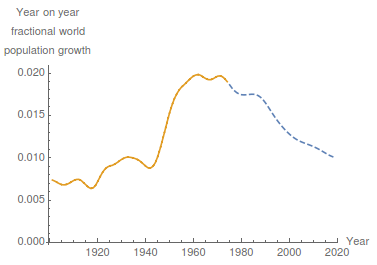
In 1976, Earth's resources seemed more pressed than ever. With population growth since 1945 averaging 2% per year, and energy consumption 7% per year, it seemed quite likely that by the early 2000s, Earth would be consumed by the throes of a Malthusian catastrophe. Expansion of industry to space, with its substantial resources, was a relatively cheap alternative. Not long after the book was published, growth stabilized at a more sustainable pace, and in the last few years energy and economic growth seems to have begun to decouple from hydrocarbon extraction, potentially freeing humanity of a major energy constraint.


A gigantic rotating space city would weigh millions of tonnes and could not possibly be launched in one piece, or even in sections from Earth. Once in space, it would continue to require a variety of raw materials to make up for gradual entropic losses, and a versatile, vibrant industry to process raw materials into any of the thousands of products needed to keep this island in the sky functioning.

While launching supplies from the Earth is possible, there are other sources of bulk raw materials in space with much less gravitational binding energy, including the Moon and asteroids. O'Neill envisioned an electromagnetic mass driver system that could launch small slugs of partially processed moon rock from a series of mines on the Moon, to the city somewhere nearby. He and his students even built a series of mass drivers to demonstrate the technology, which is today considered reasonably mature. Extremely high accelerations over short distances reduce the amount of infrastructure needed, while a stream of 1kg packets fired every second or so is adequate to provide a city with enough raw materials to make up for loss and use. Today, we know of numerous low energy transfer orbits which could convey material from the moon to almost anywhere in cis-Lunar space.

With industrial self-sufficiency sketched out, O'Neill turns to the question of economic self-sufficiency. Building and operating a space city would be enormously expensive, and would continue to require shipments of specialty components, such as computers, from Earth, essentially forever. What, then, could the space city offer Earth in order to complete the trade? While the city has a supply of moon rocks, O'Neill recognized that there wasn't concentrations of sufficiently valuable minerals on the Moon to make it worthwhile for selling in an Earth-based market. The city in space had become a solution looking for a problem.

O'Neill settled upon space solar power as the source of space-derived value necessary to balance the trade. Space solar power has certain advantages: The product could be beamed to Earth without having to go through the trouble of re-entry. The product was available essentially 24 hours a day, while on Earth the sun sets at night. Recall that in 1976, energy storage technologies such as batteries were barely on the horizon.

In addition, with 7% per year growth in energy demand, the US and every other country was looking at major infrastructure investments to meet demand for the foreseeable future. The entire grid would have had to have been overhauled every few years, at significant expense.

The final part of the problem that O'Neill examined was bootstrapping. What was the minimum viable space city that would have to be launched from Earth, could support enough people to build most of its structure from Lunar material in space, and then grow from there? Over a series of studies, O'Neill and his team were able to reduce the size of the minimal investment to only 250 shuttle launches, or 6500 tonnes. In 1976, the shuttle had not yet flown and 250 launches was thought to be about five years worth of flights, which seemed quite reasonable even without expected follow-on improvements in launch technology.

Quantification of assumptions
Thus far, O'Neill has sketched a compelling vision, a future for humans in space, unfettered by the limitations of Earth. At no point does settling the High Frontier require any miracles of technology, warp drive, or an investment equivalent to the entire GDP of the Earth for 100 years.

That said, there are still a number of assumptions, all of which need to be true, for O'Neill's vision to be viable. The most crucial of these center around the economic question.
  • Space power needs to be lucrative.
  • Space launch needs to be cheap.
  • Space industry needs to be compact.
  • Overall, the space cost multiplier needs to be low.

I will begin with the space cost multiplier question, since it's the highest level estimate possible in this case. In 2018, the per-person-day-in-space cost of the space program is about $4m. The per-person-day-on-earth cost for people of equivalent qualifications is about $400, so the human space operations cost factor is about 10,000. It is not necessary, or particularly useful, to be more precise than this. On the other hand, the value of the solar resource in space is about 3x higher than on Earth, since about ⅔ of the sun's light is blocked by the Earth during the night, or by terrain, clouds, or atmosphere. For places close to the poles, this number can increase by perhaps a factor of 10.

So even if it were possible to build gigantic solar arrays in orbit, and to capture and transmit the power to where it was needed on Earth with zero losses, the operating costs in space could be no higher than 3x that on Earth, in order to remain competitive. This is the major problem with space-based solar power. Fundamentally, the sun's light is not scarce enough on Earth, nor valuable enough on a per-m^2 basis, to make it worthwhile.

While beyond the scope of this essay, I will point out that there is no practical constraint on available area for solar panels on Earth. Solar will always use a small fraction of the area devoted to agriculture, because eating plants is about 10,000x less efficient than solar for producing mechanical work.

In fact, if we examine current and near-future commercial uses of space, the vast bulk of the industry is supported not by high power transmission of raw microwaves containing electricity, but by low power transmission of structured microwaves, containing information. The per watt value of microwaves is the fundamental question, and beaming TV, GPS signals, phone calls, and internet, is a much more sustainable business model than beaming raw power which is freely falling down anyway!

The problem with space-based communications as a a business model for space cities is that satellites are much cheaper to build and launch from Earth than to build them in space, since they are of quite small size and involve advanced, complex manufacturing.

There is an additional source of risk for long-term space infrastructure project financing, which is that not only is solar power very cheap on Earth, with a record low wholesale price of $0.023/kWh in 2018, it is getting cheaper by leaps and bounds every year. Even if a space solar power concept was valuable on paper in 2018, there is every chance that continued investment and development on Earth will lower the price so much that, like gas-powered peaker plants, a space solar power station will become a stranded asset and major loss.

Let's examine the other assumptions in turn, while bearing in mind that the total cost increase for space based power can be no higher than 3x that on Earth, corresponding to the relative value of the solar resource under the generous assumption of zero losses in transmission.

The cost of space launch must be cheap!
In 2018, the cheapest space launch was by SpaceX, at about $2000/kg to LEO. For much of the previous 3 decades, 10x this was commonplace. Yet, in "The High Frontier", O'Neill speculates that regular flights by the shuttle will reduce launch costs to the order of $100/kg. The math on reusability is much the same today, but despite recent advances in this area, improvement by another order of magnitude remains in the realm of speculation. By comparison, the cost of shipping bulk products or materials around the world on ships and trains and trucks is about $0.05/kg. At that price, an Earth-based solar panel can be shipped through every country on Earth during its production process and still have negligible increase in marginal cost compared to launching it to space.

Space-based industry must be compact!
O'Neill doesn't write from experience with industrial processes either in the 1970s or today. However, our modern economy splits machine and human labor about 1000:1 in energy terms, and as a result, any further developments for space applications will require even more automation/mechanization than is used today. There just aren't that many factories that make complicated things that aren't so big one needs a bicycle to get around. I've written at some length (https://docs.google.com/document/d/1pJzvdbtHaej9SKmNoggIrqVx-GgJO2VmpN2z2cxejPA/edit) about the difficulties of space-based industrialization, and it's not clear to me that any metal-processing nearly self-sufficient city can get by with fewer than, say, 10,000 people. The practical upshot is that throughout the bootstrapping process, the space city will remain dependent on bulk shipments of supplies from the Earth, unless and until a compact primary and secondary manufacturing paradigm can be demonstrated. It is worth stating that such an industrial system would be extremely valuable for nearly any country or city on Earth, and that despite dozens of attempts, no geopolitically isolated country has achieved it.

Resynthesis
At this point, the view is rather bleak. It turns out that O'Neill's space solar power gold mine is not viable. Does that mean the dream of millions of humans living and working in space is dead? Not quite. In this section, I explain how future technology development can help bring this vision about, through:
  • Money consumption assumption relaxation
  • Value-added manufacturing
  • Cheap launch
  • Compact industrialization

First, there is an implicit assumption that replicating the entire industrial stack in a pitiless vacuum has to make money, and on the same sorts of time scales as other large projects. Yet there is an obvious difference in scale between, say, a large bridge or chemical plant, and building an industry larger than all but a few nations on Earth. Moreover, large scale infrastructure investments are routinely made by nations with no prospect of any sort of short term return. Expenditure on health, education, defense, and other big ticket items is maintained for a variety of other reasons. Indeed, the largest expenditures by governments promote the general welfare of the nation and wider economic benefits.

I personally think there is no way to mine the moon, asteroids, or build cities on Mars and make money while doing it. I think it's worthwhile to find ways to maximize the results of a given expenditure, but fundamentally any large scale movement of humans into space will be a net consumer of wealth, to the tune of many billions per year, for decades. This expense, which is quite affordable at the national level, will employ and develop many industries on Earth, and will likely involve many of the same contractors and people as the current big ticket defense contracts do! In other words, it will not necessarily involve any new expenditures, just a slight change of course from weapons systems toward space factories.

This is not to suggest that it is pointless for cities in space to sell things in Earth-based markets, even if selling at a loss. The problem is to identify things that are worthwhile enough to bother. This is a tough problem, since nearly everything that humans needs on Earth can be found on Earth and at competitive, commodity prices. Humans in space will need to extract resources, grow food, and maintain their machines with asteroid- or moon-derived raw materials. But while such primary manufacturing is necessary to build a city in space, it's unlikely to be competitive on Earth, which has its own supply chains and breathable air.

What, then, does a good product for production in space and sale on Earth look like? It must be
  • Not readily and cheaply available on Earth. So, not a bulk commodity, like water, dirt, salt, electricity, humans, good TV, or anything in the McMaster-Carr catalog.
  • Not incredibly difficult to make, or requiring lots of human labor. Advanced composite aircraft, cars, aged care, childhood education, cutting edge silicon, medical imagers.
  • High value-added manufacturing. That is, something where the sticker price is much, much higher than the cost of the constituent components or raw materials. The German economy is built around this sort of manufacturing, and it is a comfortable middle ground between bulk commodities, on which there is no margin, and manufacturing nightmares, which require huge scale.
  • Transportable to Earth, if a physical product. So not hugely susceptible to the shocks and forces of reentry. Also, quite small in size, and with a very high value per mass. It is possible to estimate how valuable per kg something would have to be on the Moon to make it worthwhile to transport to Earth, and it's on the order of $10m/kg. This is comparable to enriched plutonium or tritium, and those markets are very elastic. That is, their value is linked to rarity. Also, the Moon doesn't have any bulk deposits of enriched plutonium lying around. With mass drivers and space cities, this cost premium would come down, but not by much. As a rule of thumb, it must be at least as valuable, in bulk, as any vanishingly scarce commodity on Earth. Perhaps the elixir of eternal life?
  • Relatively easier to make in space than on Earth. Perhaps some weird zero G crystals? Optical fibers? Unique tourist experiences?

It is hard to say in advance what advanced manufacturing might be possible and valuable in space. This is another reason to build a city in space with a primary mission of self-sufficiency, and a secondary mission of trying to be useful.

Finally, cheap launch and compact industrialization. These relate to the two main factors for the cost of building a city in space. How much stuff is needed, and how much does it cost to launch?

In my book on Mars industrialization (linked above), I estimated that a million people and a million tonnes of cargo would be needed, over several decades, to achieve full self-sufficiency. For a space city near the Earth, full self-sufficiency is not required, but overall mass requirements are higher as there is no readily available raw material. A million tonnes sounds like a lot but that's only three fully loaded container ships of the largest size. Additionally, it accounts for high technology equipment, and is separate from whatever cargo is launched from mass drivers on the Moon.

A million people and a million tonnes is actually a substantial reduction over the current state of the art, representing a further advance in mechanization of labor equivalent to the total advances to date since the industrial revolution. This industrial compactification is necessary to achieve (near) self-sufficiency in an adversarial environment, in just the same way that nuclear submarines weren't possible before steel was invented.

At current launch costs and technology, a million tonnes to LEO would require on the order of 100,000 launches at a total cost of $5 trillion dollars. If launch is to be, say, 10% of the overall program cost, and the program is budgeted at $10b/year for 50 years, then the total launch budget is $50b. This requires a reduction in launch costs of a factor of 100. To put that in perspective, that's close to the long-term goals of the SpaceX BFR or the Blue Origin New Armstrong, and could only be achieved through complete and rapid reusability of the launcher. This is not forbidden by the laws of physics, but it is a big ask.

Giant cities in space are possible, but require ongoing nation-state level funding, continued aggressive technology development in both launch and industry, and a willingness to think well outside the box when it comes to monetization.